
Losing teeth can affect far more than just your smile. It changes how you eat, how you speak, and how confident you feel in everyday situations. Fortunately, modern dentures Perth patients can access today are a far cry from what they once were, with custom-fitted options that look natural and feel comfortable from the start. Whether you’ve lost a few teeth or a full arch, understanding the difference between full and partial dentures is the first step toward choosing what’s right for you.
Key Takeaways
- Full dentures are recommended when all natural teeth in the upper or lower jaw are missing, while partial dentures are best for patients in Perth who still have some healthy teeth present.
- Partial dentures use a metal or acrylic framework secured to existing teeth, providing extra stability compared to full dentures that rely on suction or adhesive.
- Choosing between full and partial dentures depends on oral health, comfort, aesthetics, and budget, with professional assessment from a dental clinic in Perth essential for the best outcome.
- Modern dentures, whether full or partial, restore function, appearance, and confidence through comfortable, custom-made solutions.
- Proper daily cleaning and regular dental check-ups help ensure dentures remain comfortable and maintain oral health in the long term.
Understanding Dentures: An Overview
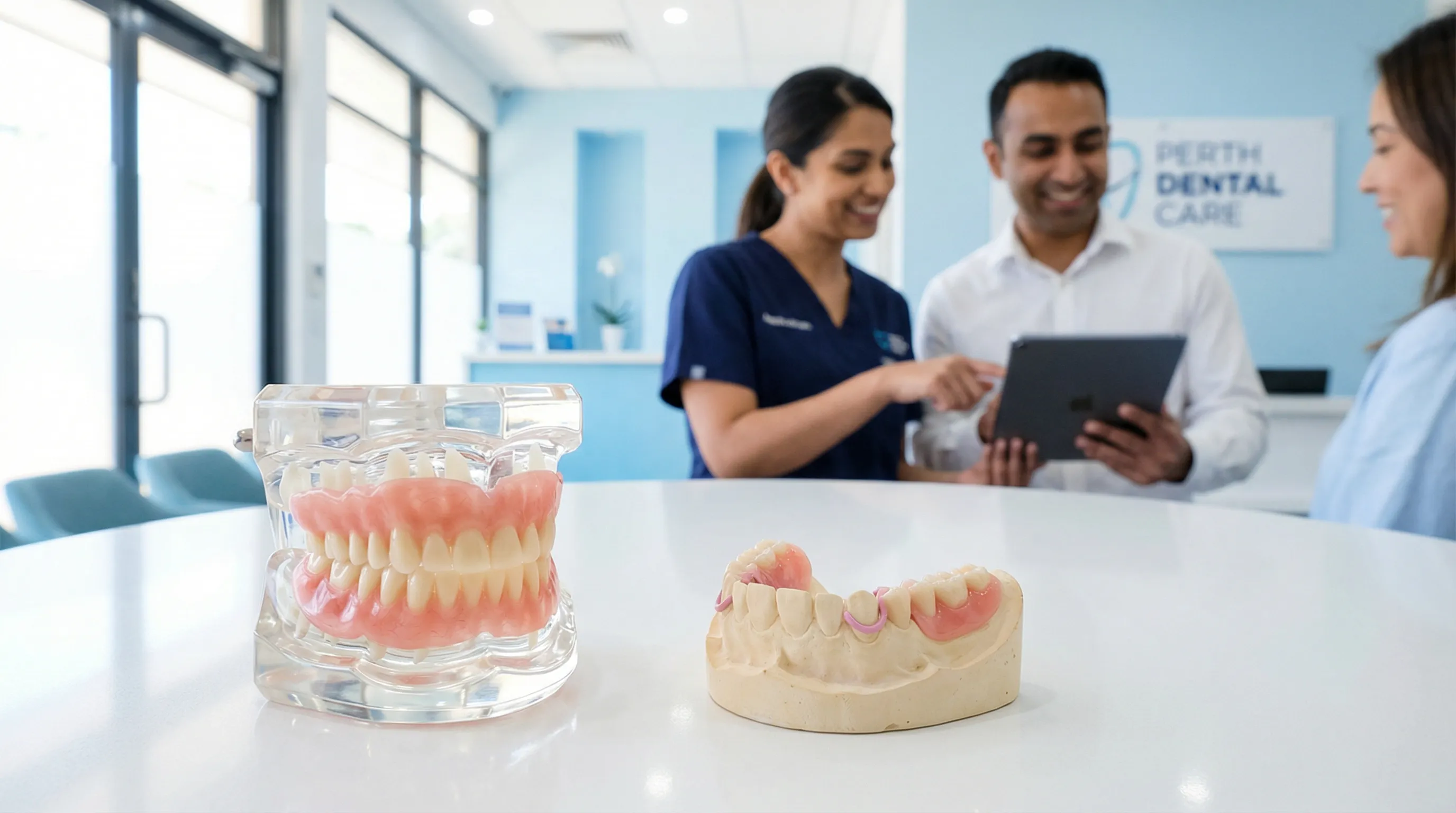
Dentures are removable dental appliances designed to replace missing teeth and surrounding tissues. They have helped countless patients regain their confidence, chewing ability, and speech. Dentures are custom-made for each person’s mouth, ensuring a precise fit and natural look. Denture technology has improved significantly over the years, making today’s options more comfortable and lifelike than ever before.
There are two main types of dentures commonly provided in Perth: full dentures and partial dentures. Choosing the right type depends on the number of remaining healthy teeth, the patient’s oral health, and individual preferences. Both offer important benefits, but they are recommended in different circumstances.
What Are Full Dentures?

Full dentures, sometimes called complete dentures, are designed for patients who have lost all their natural teeth in either the upper or lower jaw, or both. These dentures rest directly on the gums and are held in place by suction or denture adhesives. Full dentures consist of a gum-coloured acrylic base that supports a full set of prosthetic teeth.
Full dentures can be either ‘conventional‘ or ‘immediate‘. Conventional dentures are made after all teeth have been removed and the gum tissue has healed, which usually takes several weeks. Immediate dentures are prepared in advance and can be fitted right after tooth extraction, providing the patient with teeth during the healing period.
At practices like Radiant Smiles Dental Care in Yokine, these treatment options are always tailored to the patient’s unique requirements. The dental team ensures that new dentures fit comfortably and look as natural as possible, restoring both function and aesthetics.
What Are Partial Dentures?
Partial dentures are used for patients who still have some healthy natural teeth remaining in their upper or lower jaw. Rather than replacing an entire arch of teeth, partial dentures fill the gaps where teeth are missing, helping to maintain proper alignment and prevent other teeth from drifting.
A partial denture is typically made with a metal or acrylic framework that attaches securely to the natural teeth using clasps or discreet connectors. The prosthetic teeth are matched in colour and shape to the patient’s existing teeth for a seamless appearance.
For many people in Perth, partial dentures are a practical and cost-effective solution. Practices like Radiant Smiles Dental Care in Yokine take care to ensure partial dentures blend comfortably and aesthetically with a patient’s remaining teeth, supporting chewing function and speech while preserving oral health.
Key Differences Between Full and Partial Dentures
When deciding between full and partial dentures, it helps to understand the main differences:
- Purpose: Full dentures are intended for people who have lost all of their upper or lower teeth, while partial dentures are for those who still have some healthy natural teeth left.
- Structure: Full dentures cover the entire arch and sit on the gums. Partial dentures have a supporting framework and fill gaps between natural teeth.
- Attachment: Partial dentures are often held in place with clasps around the natural teeth, whereas full dentures rely on suction and sometimes adhesive.
- Stability: Some patients find partial dentures can feel more stable due to their anchorage to remaining teeth. Full dentures, especially in the lower jaw, may take some getting used to, though modern designs greatly improve comfort and fit.
- Treatment Timeline: Full dentures may require a healing period after extractions before final fitting. Partial dentures can often be made while keeping existing teeth in place.
Patients in Perth, including those attending Radiant Smiles Dental Care in Yokine, receive individual assessment to determine which option will provide the best results for comfort, aesthetics, and oral function.
Factors to Consider When Choosing Dentures in Perth
Several factors help guide the decision between full and partial dentures:
Oral Health Status
If numerous teeth are missing or beyond repair, full dentures may be recommended. If several healthy teeth can be preserved, partial dentures are often preferred.
Comfort and Stability
Every mouth is different. Some patients adjust quickly to full dentures, while others find partial dentures feel more stable thanks to the support from existing teeth.
Aesthetics
Both full and partial dentures are designed to look natural, but patients may have preferences based on how the dentures will blend with their facial features and remaining teeth.
Budget and Longevity
Cost is a consideration for most patients. In Perth, full dentures generally cost more if an entire arch is being replaced, though partial dentures can involve additional dental work, such as preparing support teeth. It’s also worth noting that both types may need adjustments over time as the mouth changes shape.
Dental Support in Yokine
Practices like Radiant Smiles Dental Care provide comprehensive consultations. Their team can help patients understand the best denture solution for their needs, fully explaining what to expect during treatment and aftercare.
Caring for Your Dentures
Proper care helps dentures last longer and keeps your mouth healthy. Here’s what every denture wearer in Perth should know:
- Daily Cleaning: Remove dentures daily and clean them with a soft brush and a denture-specific cleanser. Avoid hot water, as it can warp the material.
- Oral Hygiene: Even with full dentures, it’s important to gently brush gums and the tongue each day. Partial denture wearers must pay extra attention to natural teeth and the gumline to prevent decay and gum disease.
- Overnight Removal: Most dentists recommend removing dentures at night to give your gums a break and reduce the risk of irritation or infection.
- Regular Dental Visits: See your dentist regularly for checks and adjustments. Radiant Smiles Dental Care in Yokine offers ongoing support and maintenance to help dentures continue fitting comfortably.
- Prompt Repairs: If dentures break or feel uncomfortable, don’t attempt a DIY fix. Schedule a professional repair to avoid damaging the appliance or your mouth.
About Radiant Smiles Dental Care
Business: Radiant Smiles Dental Care
Spokesperson: Dr Anand Ponnusamy
Position: Principal Dentist
Phone: (08) 9440 3654
Email: [email protected]
Location: Shop 6/201 Flinders Street, Yokine WA 6060
Website: https://radiantsmiles.com.au/
Frequently Asked Questions about Full and Partial Dentures in Perth
What is the difference between full and partial dentures?
Full dentures replace all teeth in the upper or lower jaw, resting on the gums, while partial dentures fill gaps between remaining healthy teeth using a supporting framework. The choice depends on how many natural teeth you still have and your individual oral health needs.
When should I choose full dentures over partial dentures in Perth?
Full dentures are recommended when you have lost all teeth in a dental arch. If you retain several healthy teeth, partial dentures are generally preferable as they help maintain alignment and oral function while blending with remaining natural teeth.
How are partial dentures held in place?
Partial dentures are typically secured using metal clasps or discreet connectors that attach to existing healthy teeth. This design provides stability and ensures the denture stays comfortably in place during daily activities, such as eating and speaking.
How do I care for my dentures in Perth?
Clean your dentures daily with a soft brush and denture cleanser. Remove them overnight to let your gums rest, and brush your gums and any remaining teeth carefully. Regular dental check-ups at practices like Radiant Smiles Dental Care in Yokine are also important for adjustments and ongoing maintenance.
Are partial dentures more comfortable than full dentures?
Many patients in Perth find partial dentures feel more stable and comfortable, thanks to the support from remaining natural teeth. However, comfort varies by individual, and modern full dentures are also designed for an improved fit and function.
How much do full and partial dentures cost in Perth?
The cost of dentures in Perth depends on the type and materials used. Generally, full dentures may cost more due to replacing an entire arch, while partial dentures can involve additional preparation of natural teeth. Consultation with your dentist will provide a clear estimate tailored to your needs.